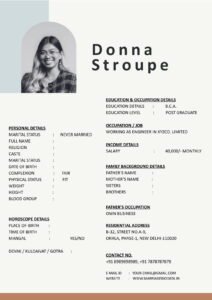
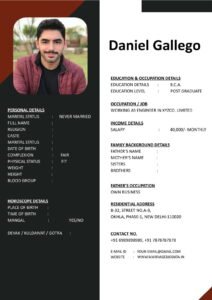
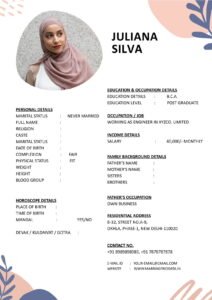
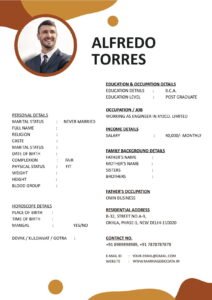
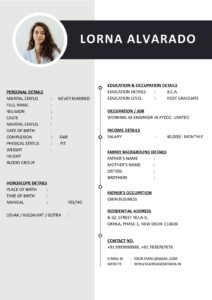
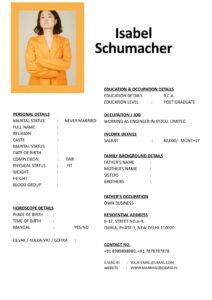
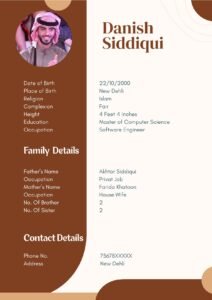
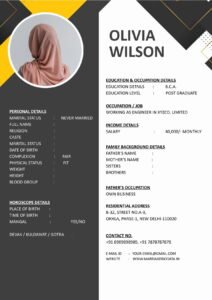
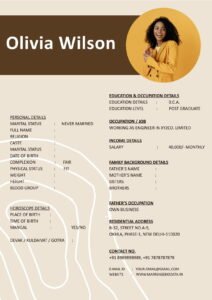
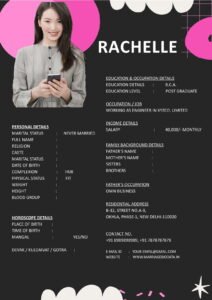
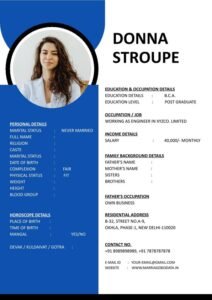
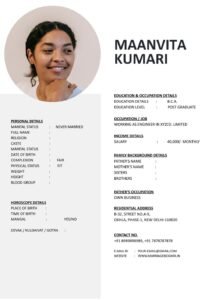
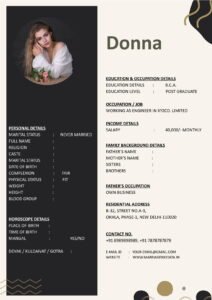
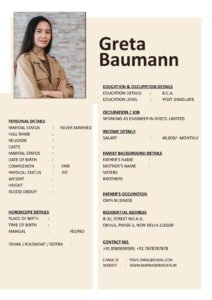
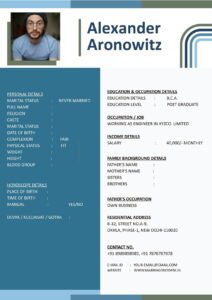
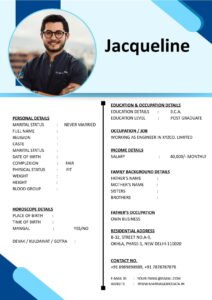
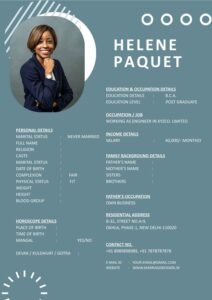
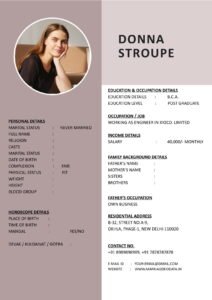
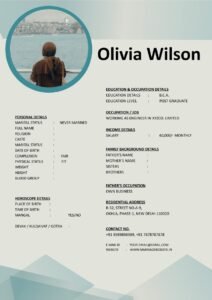
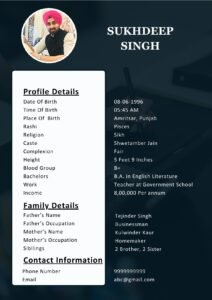
The “About Myself” section is the heart of your marriage biodata. It’s the part where your real personality, values, and future plans come alive beyond dry facts like height, degree, and salary.
Done right, it can instantly connect you with the right families and filter out mismatched proposals. Done poorly, it makes you look generic, confused, or even arrogant.
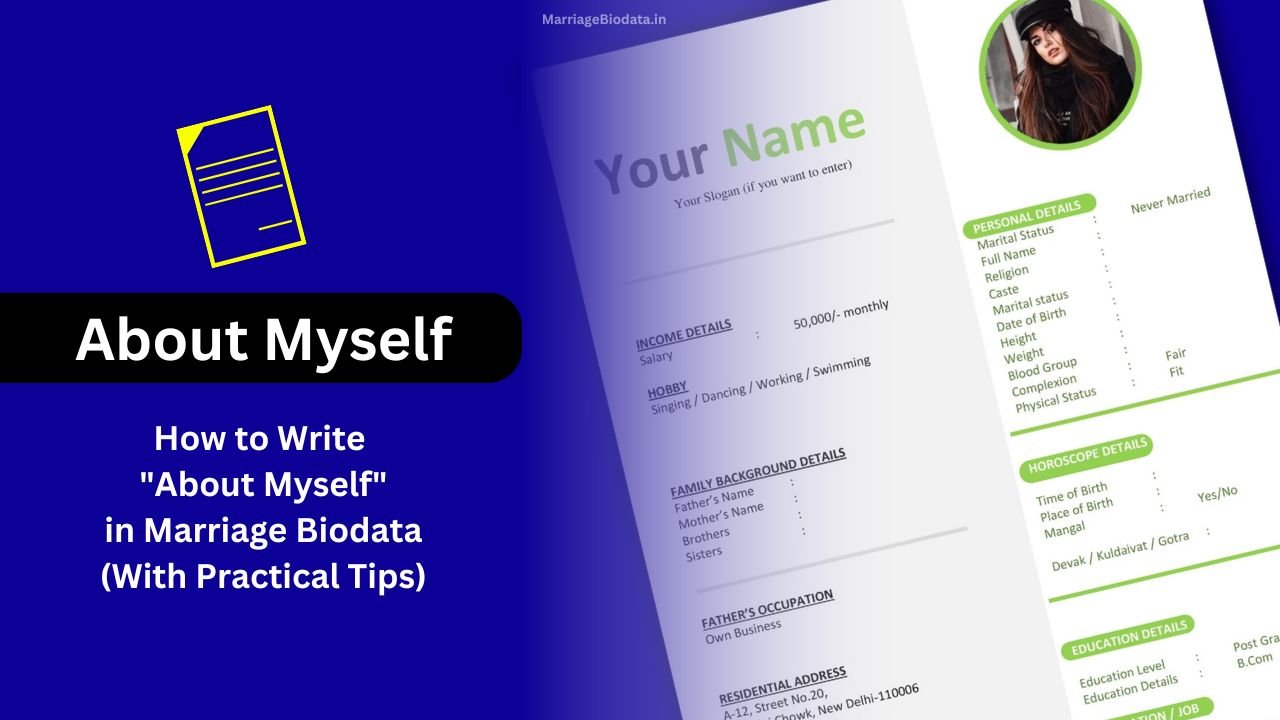
What Is the “About Myself” Section?
The “About Myself” section is usually a short paragraph of 5–8 lines where you introduce who you are as a person, beyond the basic biodata fields. It highlights your personality, lifestyle, family values, interests, and what you are looking for in married life.
Think of it as how you would talk about yourself in a respectful, positive way if you were sitting in front of your future in-laws for the first time.
Ideal Length and Structure
Most experts suggest keeping the “About Myself” section to one short paragraph or at most two short paragraphs (about 80–150 words). This is long enough to show your personality but short enough to keep readers interested.
A good structure looks like this:
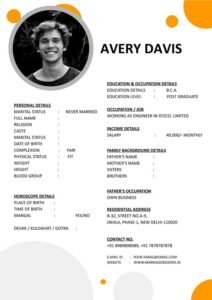
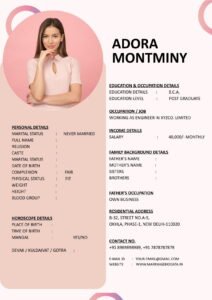
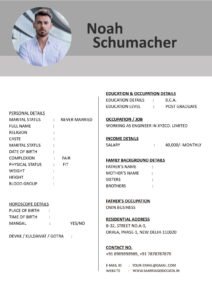
- Basic intro (who you are, what you do, where you’re from)
- Family and values
- Hobbies and lifestyle
- Goals and what you expect from married life
Step-by-Step: How to Write “About Myself”
Step 1: Start With a Simple Introduction
Begin with your current role and basic background instead of repeating your full biodata.
- “Born and brought up in…”
- “Currently working as…”
- “Originally from…, now settled in…”
Example opening lines:
- “Born and raised in Mumbai, I am an IT professional working in a multinational company.”
- “I am a doctor currently practicing in Bengaluru, originally from a traditional family in Mysore.”
Step 2: Mention Your Family and Values Briefly
One or two lines about your family shows your roots and value system without turning it into a full family history.
- “I belong to a close-knit family that values education and simplicity.”
- “My parents have always taught me the importance of honesty, respect, and humility.”
Step 3: Highlight Your Personality and Interests
This is where your “About Myself” becomes unique. Add 2–3 specific hobbies and traits rather than generic lines like “simple and honest person”.
- “I enjoy reading non-fiction, exploring new cafes, and practicing yoga.”
- “In my free time, I love travelling, trying new cuisines, and spending time with family.”
Helpful word ideas: honest, calm, caring, responsible, ambitious, family-oriented, open-minded, grounded, respectful.
Step 4: Share Your Outlook on Life and Marriage
End by expressing what you value in relationships and what kind of partnership you hope to build. Keep it positive and future-focused.
- “I believe marriage is about mutual respect, understanding, and growing together.”
- “I look forward to building a relationship based on trust, support, and shared values.”
Template: Plug-and-Play “About Myself” Framework
You can use this simple template and fill in your own details:
I am a [age]-year-old [profession] currently working in [city].
Born and brought up in [hometown], I come from a [type: traditional / moderate / modern] family that values [values: education, respect, simplicity].
In my free time, I enjoy [2–3 hobbies: reading, travelling, fitness, music, etc.].
Friends describe me as [2–3 traits: calm, caring, responsible, open-minded].
I believe marriage is a partnership based on [values: trust, understanding, mutual support] and I am looking for a partner who shares similar values and is [few qualities: respectful, family-oriented, career-positive].
Adjust the tone to match you – more formal or slightly casual – but stay respectful.
Practical Examples for Different Profiles
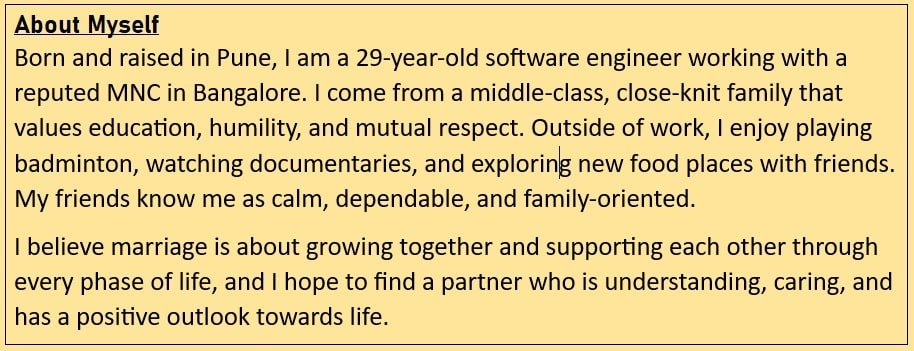
Example 1: Groom – IT Professional
This style suits engineers, IT professionals, and corporate roles.
Example 2: Bride – Working Professional
This works well for women balancing career and family values.

Example 3: Simple & Traditional Profile
Suitable for those who prefer simplicity and a more traditional tone.

Words and Phrases to Use (and Avoid)
Good Words to Use
Based on many successful biodata examples, these words tend to work well when they genuinely describe you:
- Personality: honest, kind-hearted, calm, understanding, responsible, caring, grounded, balanced, ambitious
- Values: family-oriented, respectful, traditional yet modern, open-minded, spiritual, value education
- Lifestyle: active, health-conscious, simple living, work-life balance
Phrases to Avoid or Improve
- Too generic: “I am simple, loving and caring.” → Add specifics: who you are, what you actually do, what you enjoy.
- Negative tone: “I hate fake people” → Reframe: “I value honesty and straightforward communication.”
- Demands-focused: “Looking for rich, fair, beautiful partner” → Focus on values: “Looking for a kind, understanding partner with similar values.”
Common Mistakes in the “About Myself” Section
- Copy-paste from internet samples: Many profiles use the same lines, which looks insincere. Use samples only as inspiration, not to copy.
- Too much career, no personal side: Only talking about salary and achievements can make you look materialistic; balance work and personal values.
- Over-sharing sensitive details: Avoid deep medical, financial, or past-relationship details in this section; such topics are better discussed later.
- Writing in third person when not needed: “She is…” or “He is…” can sound unnatural if you are writing your own biodata; first person usually feels more genuine.
- Very long paragraphs: Huge blocks of text are hard to read on mobile; keep sentences short and paragraphs small.
Quick Checklist Before Finalizing Your “About Myself”
- 1–2 short paragraphs (80–150 words)
- Covers intro, family, personality, hobbies, outlook
- Positive, respectful tone; no complaints or negativity
- Uses 2–3 strong but honest traits (e.g., calm, caring, ambitious)
- No spelling or grammar mistakes