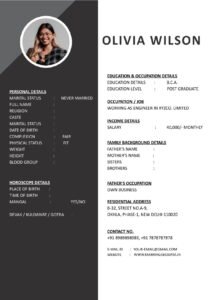
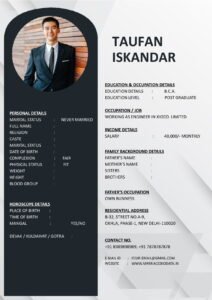
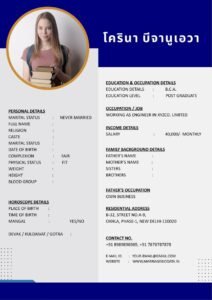
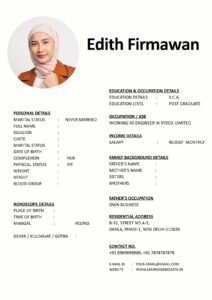
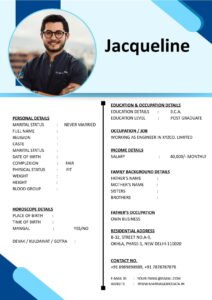
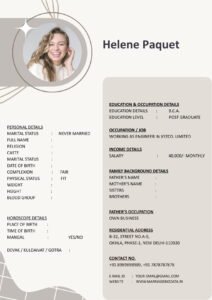
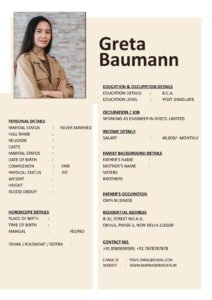
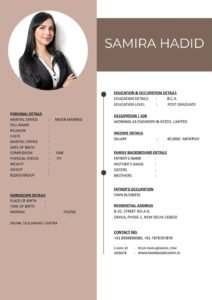
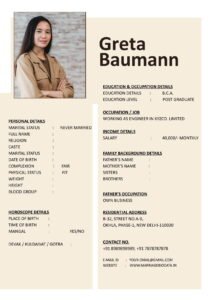
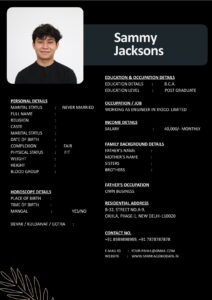
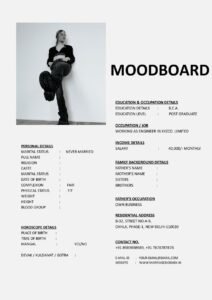
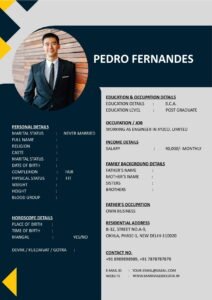
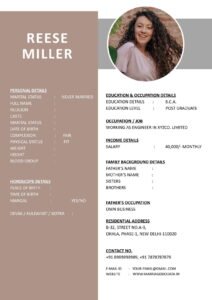
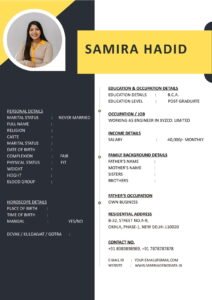
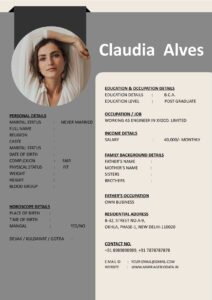
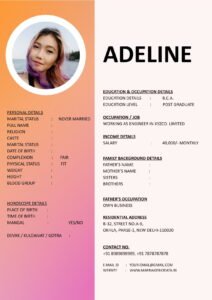
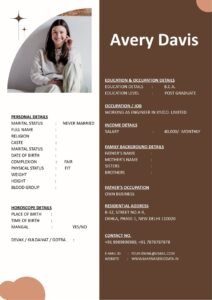
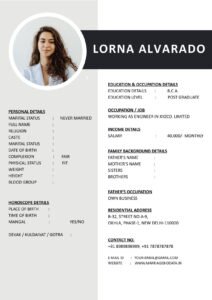
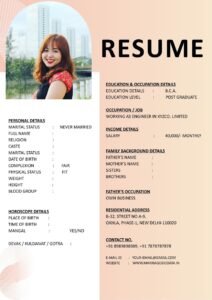
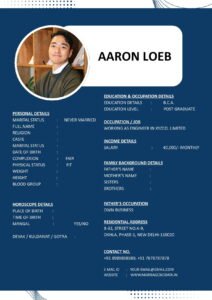
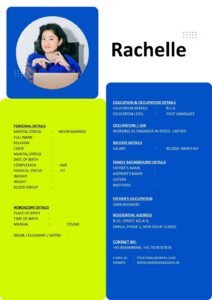
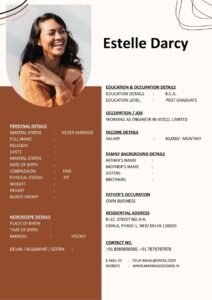
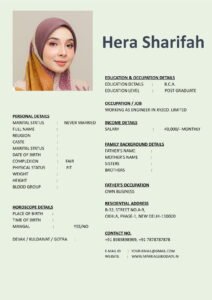
A marriage biodata is a structured profile that introduces you and your family to potential matches in arranged or semi-arranged marriage setups. It acts like a “marriage resume” that helps families quickly understand who you are, what your background is, and what kind of partner you are looking for.
What is a Marriage Biodata?
 A marriage biodata is a one- or two-page document that summarizes key personal, family, educational, professional, and lifestyle details of a person who is looking for a life partner. It is widely used in India, Pakistan, Bangladesh, and among NRIs, especially in arranged marriages.
In simple words, it is a formal way of presenting:
- Who you are
- Where you come from
- What you do
- How your family is
- What kind of partner and family you are seeking
Unlike a job resume, its goal is not to get you a job but to help you find a compatible life partner and family.
Why Marriage Biodata is Important
1. First impression before meeting
- In many arranged marriages, the first thing families see is the biodata, not you.
- A clear, honest, and well-designed biodata makes you look serious, trustworthy, and respectful.
2. Saves time and avoids mismatch
- Key filters (age, religion, caste/community, language, location, education, profession) are clear on page one.
- Families quickly know whether to proceed, saving everyone from awkward or mismatched proposals.
3. Helps parents and relatives represent you correctly
- Parents often share your biodata with relatives, family friends, or matchmakers.
- A structured biodata ensures they don’t forget important details or misrepresent you.
Marriage Biodata vs Job Resume vs Matrimony Profile
| Aspect | Marriage Biodata | Job Resume | Matrimony Website Profile |
|---|---|---|---|
| Purpose | Find a suitable life partner and family | Get a job or internship | Find a partner via online portals |
| Focus | Personal, family, culture, values, preferences | Skills, experience, achievements | Mix of biodata + photos + platform features |
| Tone | Personal, respectful, balanced | Professional, achievement-focused | Casual to semi-formal |
| Sections | Personal, family, education, profession, partner | Contact, summary, skills, experience, education | Profile details + “About me” + filters |
| Format | PDF/Word/Printed, 1–2 pages | PDF/Word, 1–2 pages | Online form pages |
Core Sections of a Marriage Biodata
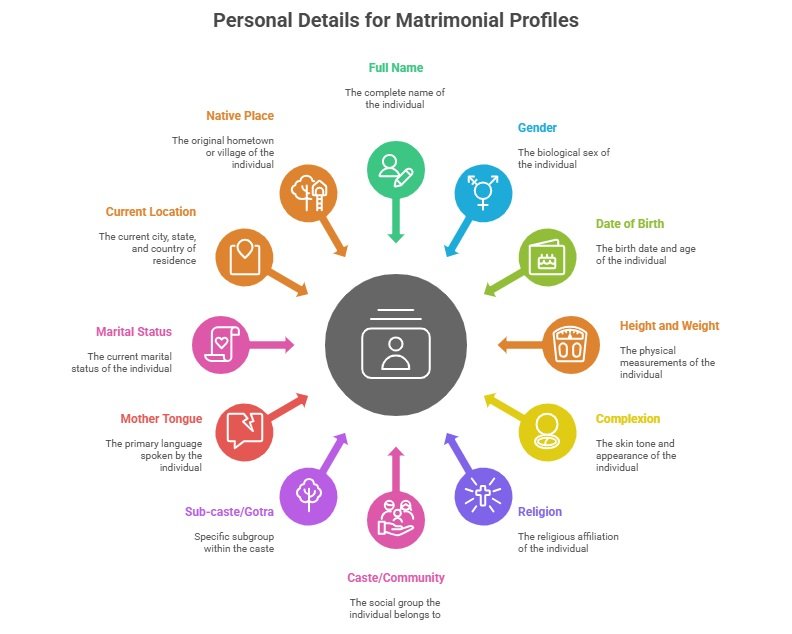
1. Personal Details
This section gives a quick snapshot of who you are.
Common items:
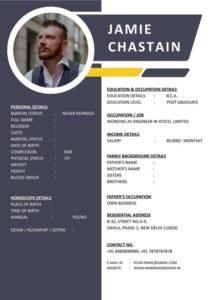
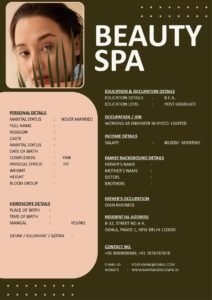
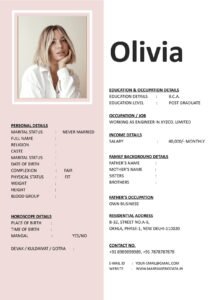
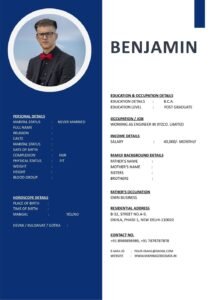
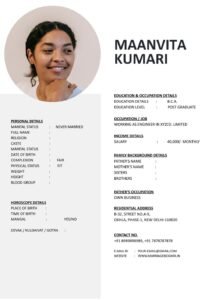
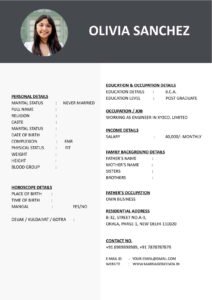
- Full name
- Gender (Bride/Groom)
- Date of birth and age
- Height and weight
- Complexion / appearance (optional or very brief)
- Religion and caste/community
- Sub-caste / Gotra / Rashi (if your community prefers)
- Mother tongue and other languages
- Marital status (never married / divorced / widowed)
- Current city, state, and country
- Native place (original hometown or village)
Tips:
- Avoid negative or harsh words about appearance.
- Use consistent formats for dates, height, and locations.
2. Education Details
This section shows your academic background and seriousness towards career and learning.
You can include:
- Highest qualification (e.g., B.Tech in Computer Science)
- Other degrees/diplomas (e.g., MBA, CA, MSc, B.Ed)
- College/university name and location
- Schooling (optional, can be summarized)
- Any key certifications relevant to your profile
Best practices:
- Start with the highest qualification and go backwards.
- Don’t exaggerate or fake degrees; background checks are common.
3. Professional / Career Details
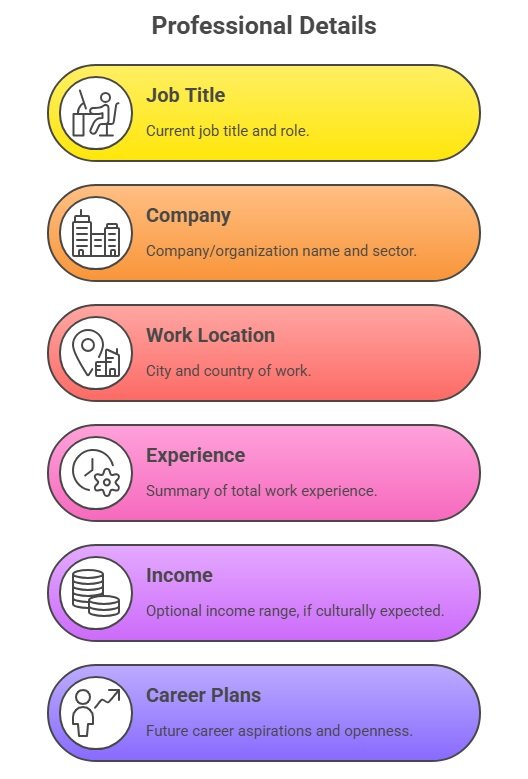 This section matters a lot for today’s generation, especially in urban and NRI matches.
Include:
- Current job title and role (e.g., Senior Software Engineer, Assistant Professor)
- Company/organization name and sector
- Work location (city, country; remote/hybrid if relevant)
- Work experience summary (e.g., total years of experience)
- Income range (optional; if culture expects, mention respectfully)
- Future career plans (e.g., planning higher studies, relocation openness)
Real-life example (good style):
“Working as a Software Engineer with a reputed MNC in Bangalore, with around 5 years of experience in backend development. Open to relocating within India or abroad after mutual discussion.”
4. Family Background
In arranged marriages, families are often evaluated as much as the boy or girl.
You can include:
- Father’s name and occupation (e.g., retired government officer, businessman)
- Mother’s name and occupation (e.g., homemaker, school teacher)
- Siblings: number, elder/younger, married/unmarried, their profession/location
- Type of family: joint/nuclear, small/medium/large
- Family values: traditional / moderate / modern
- Family’s native place and current location
- Brief family reputation or standing (without bragging)
5. Lifestyle, Personality, and Interests
This helps the other side imagine living with you.
Common things to cover:
- Food habits: vegetarian / eggetarian / non-vegetarian / vegan
- Smoking and drinking habits (non-smoker / occasional / regular)
- Daily routine highlights (if important: spirituality, gym, early riser)
- Hobbies and interests: reading, travel, music, sports, volunteering, etc.
- Personal values: respect for elders, career-oriented, family-oriented, spiritual, etc.
Example:
“She enjoys reading, light music, and weekend family outings. Values honesty, simplicity, and mutual respect in relationships.”
6. “About Me” Summary
This is usually a short paragraph (5–8 lines) that combines important points from all sections in a human, warm tone.
Example (bride):
“I am a 27-year-old software engineer working in Pune. Friends describe me as calm, caring, and responsible. I belong to a close-knit, middle-class family from Nashik that values education and simplicity. I enjoy reading, cooking new recipes, and exploring new places with family. Looking for a partner who is understanding, respectful, and values both personal and professional growth.”
7. Partner Preferences
This section clearly but politely explains what kind of partner and family you hope for.
You may mention:
- Preferred age range
- Height range (optional; don’t be overly rigid)
- Religion and caste/community preferences (if important to your family)
- Education preferences (e.g., graduate/postgraduate, professional degrees)
- Profession preferences (e.g., stable job, similar field, business okay)
- Location preferences (e.g., metro cities, open to relocation)
- Personality/value preferences (e.g., understanding, family-oriented, progressive)
8. Contact Details
Usually, parents’ or guardian’s contact details are added, especially in traditional setups.
- Name and relation (e.g., father, mother, elder brother)
- Phone number(s)
- Email address
- City and state
Simple Marriage Biodata Structure (Template Overview)
- Header
Name, Photo, Basic details (age, height, religion, caste, location) - Personal Profile
Date of birth, place of birth, Marital status, Languages known, Food and lifestyle habits - Education & Career
Highest qualification, Other key degrees, Current job title and company, Work location and experience - Family Details
Father, mother, siblings, Family type and values, Native place and current city - About Me
Short paragraph summarizing personality, interests, outlook - Partner Preferences
Age, education, profession, location, values - Contact Details
Parents’/guardian’s contact info
Real-Life Example: How a Good Biodata Helps
Imagine two grooms:
- Groom A sends a half-filled Word file with poor formatting, no photo, and one-line family details.
- Groom B sends a neat one-page PDF with a clear photo, structured sections, honest details, and a warm “About Me” and partner preference.
Even if both have similar education and salaries, Groom B will get far more positive responses because:
- Families feel they “know” him better.
- The biodata looks serious and respectful.
- It’s easier to read and share with relatives.
How to Make Your Marriage Biodata Look Professional
Formatting Tips
- Use clean fonts (e.g., Arial, Calibri, Times New Roman).
- Keep font size between 10–12 for body, 14–16 for headings.
- Use clear section headings (Personal Details, Education, Family, etc.).
- Maintain enough white space; don’t overcrowd.
Photo Tips
- Use a recent, high-quality photo.
- Simple background, decent formal or semi-formal clothes.
- Natural, pleasant expression; no filters or Snapchat effects.
Common Mistakes to Avoid in Marriage Biodata
- Overly short biodata: Only 4–5 lines without sections; looks lazy and unserious.
- Too much personal or sensitive information: Bank details, exact address, detailed medical history, etc.
- Negative or bitter tone: Complaints about past relationships, family issues, or demands-heavy language.
- Unclear or unrealistic partner expectations: Very narrow age/height/education filters, or long “must-have” lists.
- Poor formatting and typos: Grammar mistakes and inconsistent formatting reduce trust.
Now you understand what a marriage biodata is and how it opens doors to the right life partner. Start creating yours today at MarriageBiodata.in with free templates and expert guidance!